Start here · Tutorial
Trace a notice to the duty behind it
Follow one real Sanitation rule notice back to the section of the City Charter that told the agency to write it, and read that law at its own source.
How do I get from a published notice to the law that required it?
What you will do
Most city notices exist because something told the agency to publish them. This tutorial follows one real notice back to that something: a final rule from the Department of Sanitation, and the section of the New York City Charter that put the agency in charge of the subject in the first place.
By the end you will have read the rule notice, opened the duty behind it, read that duty at the city's own source, and seen which notices are on record as filings against it. You will also be able to say what the trail does not prove.
Before you start
- No account is needed, and nothing here signs you up for anything.
- Set aside about ten minutes.
- The notice and the page for the duty behind it are both ordinary pages. They read without JavaScript. Only the optional watch step at the end needs the interactive part of the site.
Step 1 — Open the notice
Open the Sanitation final rule notice.
It is titled DSNY Final Rule re Implementation Dates for the Brooklyn North and Upper Manhattan Commercial Waste Zones. Its own official copy sits behind the Official record link, on The City Record Online, which is where the city published it.
Checkpoint: you are on a single notice, with its title and its link to the city's published copy.
Step 2 — Find the duty the notice answers to
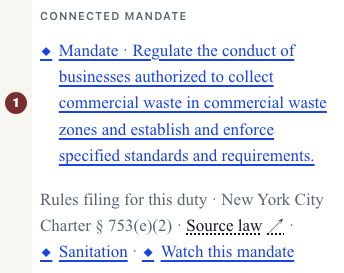
Scroll to the block headed Connected mandate.
It names one duty, in the words the law uses: regulate the conduct of businesses authorized to collect commercial waste in commercial waste zones, and establish and enforce specified standards and requirements. Underneath it, three short pieces of information do the real work.
- Rules filing for this duty is the relation. It says what kind of link this is: this notice is a rules filing that answers to that duty.
- New York City Charter § 753(e)(2) is the citation, so you can look the duty up yourself.
- Sanitation is the agency the duty belongs to.
Checkpoint: you can say, in one sentence, which duty this notice is a filing against and where that duty is written down.
Step 3 — Open the duty itself
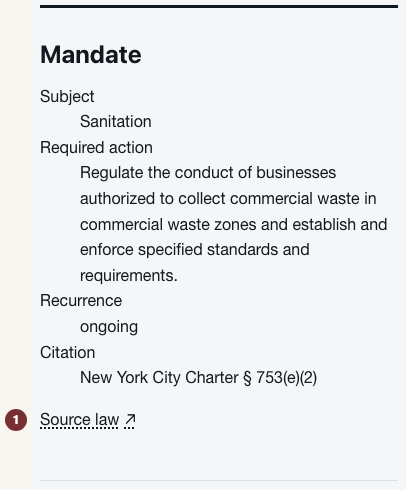
Click the duty text. It takes you to /mandates/64116-001, the page for that one duty.
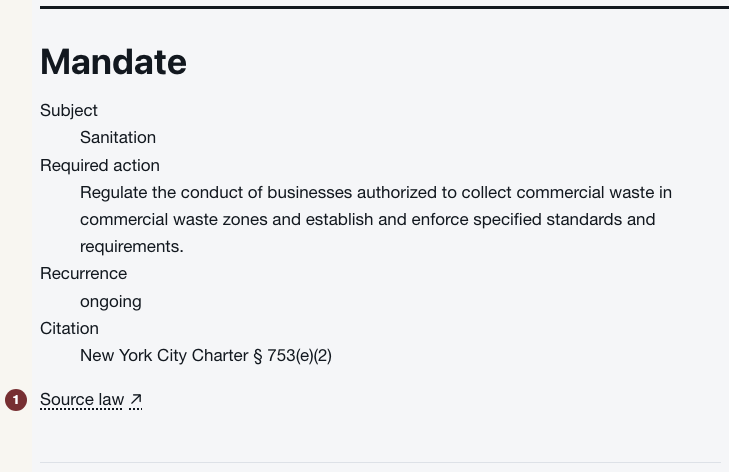
The page is short on purpose. It carries the subject agency, the required action, how often the duty recurs, and the citation, and then a link labelled Source law.
Checkpoint: you are on a page about a duty rather than about a notice, and it names Sanitation as the agency that carries it.
Step 4 — Read the law at its own source
Open Source law. It leaves CityScroll for the city's own legislation site, where the underlying item is published.
This is the same habit the first tutorial ends on. CityScroll is a reading aid: it collects what has been published and shows you where to confirm it. The law is the city's, and the city's copy is the one to rely on.
Checkpoint: you have the underlying legislative item open on a nyc.gov site, in the city's words.
Step 5 — See what has been filed against the duty
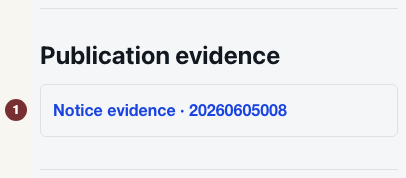
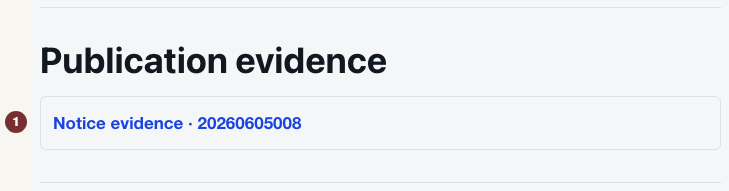
Go back to the mandate page and read the section headed Publication evidence.
It lists the notices that are on record as filings against this duty — including the one you started from. That is the loop closing: you arrived from a notice, and the duty knows about that notice in return.
Checkpoint: the notice you came from appears in the list, by its request number.
Step 6 — What this trail does not prove
This is the most useful part of the lesson, and it is worth being blunt about.
- A duty is what a law requires of an agency.
- A notice is a thing the agency published.
- The connection between them is a link CityScroll drew from published records. It is a reasonable reading of the two documents, not a statement by the agency.
- A compliance finding is a judgment that the agency did or did not meet its duty. Nobody on this page has made one, and CityScroll does not make them.
So the honest sentence at the end of this trail is: the city published a rule that answers to this duty. Not: the agency has satisfied this duty. Whether a filing is complete, timely or sufficient is a question for the agency, the Council, or a court.
Checkpoint: you can name the difference between a filing existing and a duty being met.
Optional — Watch the duty instead of the notice
Back on the notice, next to the connection, there is a Watch this mandate link. It carries you to Following with the duty already chosen, so you can be told when something new is filed against it rather than checking by hand.
That is the only step here that asks anything of you, and it is optional. Following is an interactive part of the site and needs JavaScript switched on. Everything else in this tutorial works signed out and without it.
What you learned
- A notice can carry a link to the duty that produced it, with the relation and the legal citation written out.
- A duty has its own page, its own source, and its own list of what has been filed against it.
- Publication, duty, connection and compliance are four different things, and only the first two are documents.
Where to go next
Try the same three steps on another rule notice: open it, look for a Connected mandate block, and follow it to the duty and its source.
If the block is not there, that is information too. It means no supported connection has been drawn for that notice — not that no law lies behind it. To see how those connections are made and what evidence sits under them, read how to check the evidence behind a connection.