此翻译由机器初步生成,尚未经过母语人士审核。
英文原文:Start here · 教程
英文原文:Explore housing across city records
英文原文:Search for housing, compare two kinds of record, and check a result at its official source.
英文原文:Step 1 — Search for housing
英文原文:Open the CityScroll front page, type housing in the search box and press 搜索. Search needs JavaScript switched on. No account or email address is needed. The results page shows your word and groups such as 合同, People + organizations, 土地, 规则, 会议, and 考试. Counts vary with the published records.
英文原文:Step 2 — Open an agency result
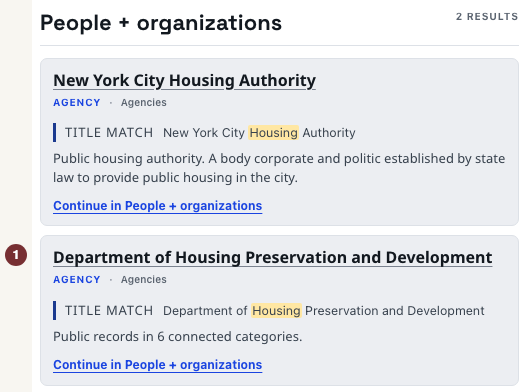
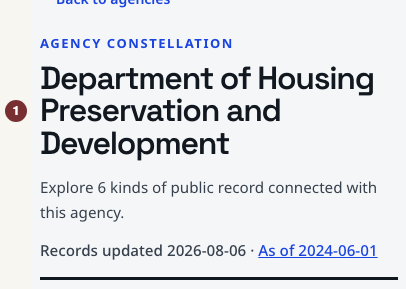
英文原文:In People + organizations, select an agency title, such as Housing Preservation and Development when it appears. The agency page names the agency and groups its connected records by kind. If this group is empty, try another agency-related word in the search field.
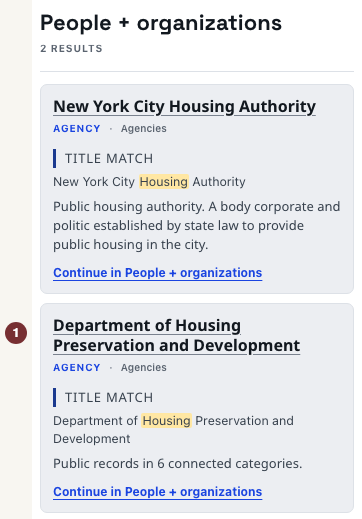

英文原文:Step 3 — Compare a rule result
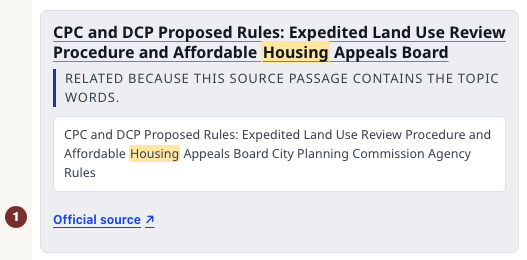
英文原文:Use your browser's Back button to return to the housing search. In 规则, read a result's match explanation. A passage match quotes the published sentence containing your topic. Rules include proposals and final rules: check the record's stage before treating it as an open chance to comment. A final rule is not a proposal.
英文原文:Step 4 — Check the official copy
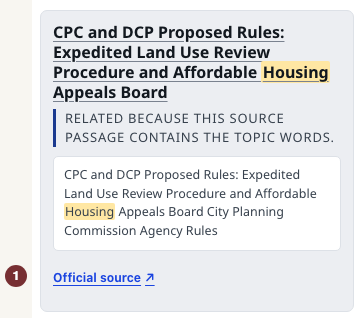
英文原文:For a result with a quoted passage, open 官方来源 beside that passage. Check the title, agency and stage on the city's published copy. If no passage result appears, open a result's title and use its 在市政公报中查看 link instead. You now have a source you can rely on, rather than just a search match.
英文原文:Step 5 — Keep and repeat the search
英文原文:Return to the search results and copy the browser address. Paste it into a new tab: housing and the grouped view should return, although the records can change. Repeat with a street or agency you care about. Compare two groups again and check one official copy. The glossary explains unfamiliar record types without being a prerequisite.
英文原文:When a source cannot load
英文原文:A failed source is unknown, not a group with no records. Reload the search or use the record's official link. An empty group alone does not establish that nothing happened.